
The Buraco KZV rules, with real examples
The essentials to understand what makes a valid meld — with the same cards you see on the table. The full rules are also inside the app, under the "?" button.
What counts as a meld
Only same-suit sequences count, with 3 cards or more. A set (same rank, different suits) doesn't count in this version.
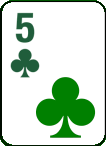
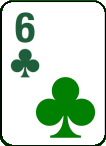
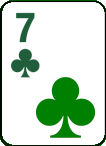
Same-suit sequence. 5♣-6♣-7♣: three cards in a row, all clubs. Valid.
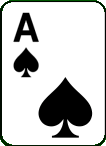
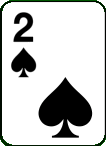
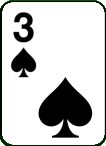
The Ace works at the low end. A♠-2♠-3♠: the Ace opens the sequence.
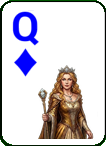
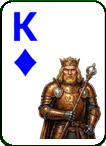
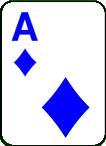
The Ace works at the high end. Q♦-K♦-A♦: the Ace also closes the sequence.
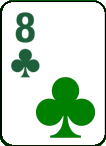
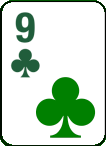
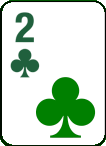
The "2" can be a regular card or a wild card. Here the 2♣ stands in for the 10♣ — the sequence works, but it's "dirty" (see Canasta, below).
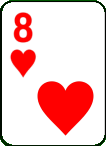
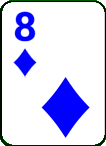
Sets don't count. Three 8s of different suits don't make a meld — only same-suit sequences count.
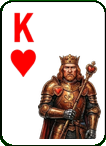
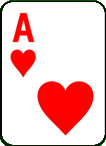
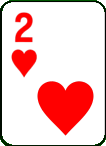
A sequence doesn't wrap around. K♥-A♥-2♥ doesn't exist — the Ace is one end OR the other, never both at once.
How wild cards work
The joker is always wild. The "2" is wild in any sequence where it isn't in its own natural position. Each meld can have at most one wild card, and wild cards can never equal or outnumber the natural cards.

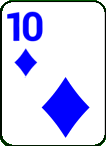
It fills a gap. 8♦-wild-10♦: the wild card stands in for the missing 9♦.
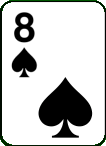
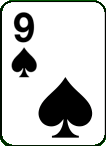
It extends an end. 8♠-9♠-wild: the wild card counts as 7♠ or 10♠, whichever is better.
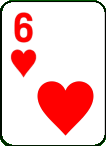
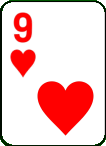
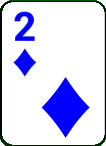
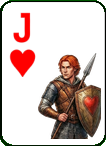
Only one wild card per meld. Here the joker is the 7♥ and the 2♦ is the 10♥ — two wild cards in the same sequence. Not valid, even with the natural cards in the majority.
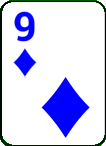
Wild cards can't equal the natural cards. 2 natural cards (8♦, 9♦) and 2 wild cards — not valid, even though the "one wild card" limit is already another reason to refuse it.
Canasta
A meld of 7 cards or more becomes a canasta. Clean (no wild card) is worth more than dirty (with a wild card) — and completing the suit's WHOLE sequence, ace to ace, is worth three times as much.
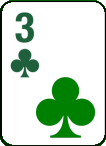
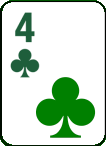
7 clubs in a row, with no wild card.
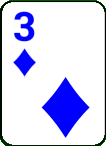
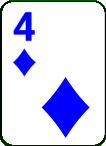
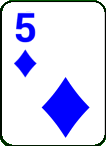
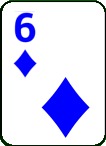
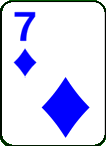
The same idea, but with a wild card standing in for the 9♦.
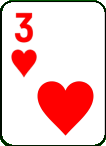
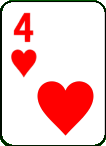
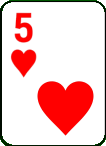
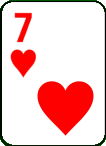
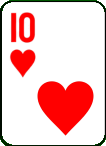
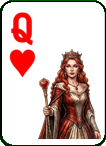
The COMPLETE sequence of the suit, Ace at both ends — the most valuable play in the game (+300 with a wild card).
Taking the discard pile
Instead of drawing from the stock, you can take the whole discard pile — but not for free: at least one card from the pile has to go on the table right away.
The card you use can be any one in the pile, even buried in the middle — it doesn't have to be the top one. It has to make a new meld or fit into a meld you've already laid down, and that meld goes on the table in the same move. There's no taking the pile just to stock up your hand. All the rest of the pile goes to your hand.
What locks the pile: if the last card discarded is a wild card — a 2 or a joker — the pile freezes and nobody can take it while that wild card is on top: neither the top card nor the ones below. A wild card buried in the middle of the pile freezes nothing and can be taken normally.
Card values
At the end of the game, each player adds up the value of the cards they laid down, subtracts what's left in their hand, and loses 100 points if they didn't take their dead pile.
Ready to try it at the table?
The full rules — turns, the dead pile, going out — are also inside the app, under the "?" button.
Google Play: coming soon